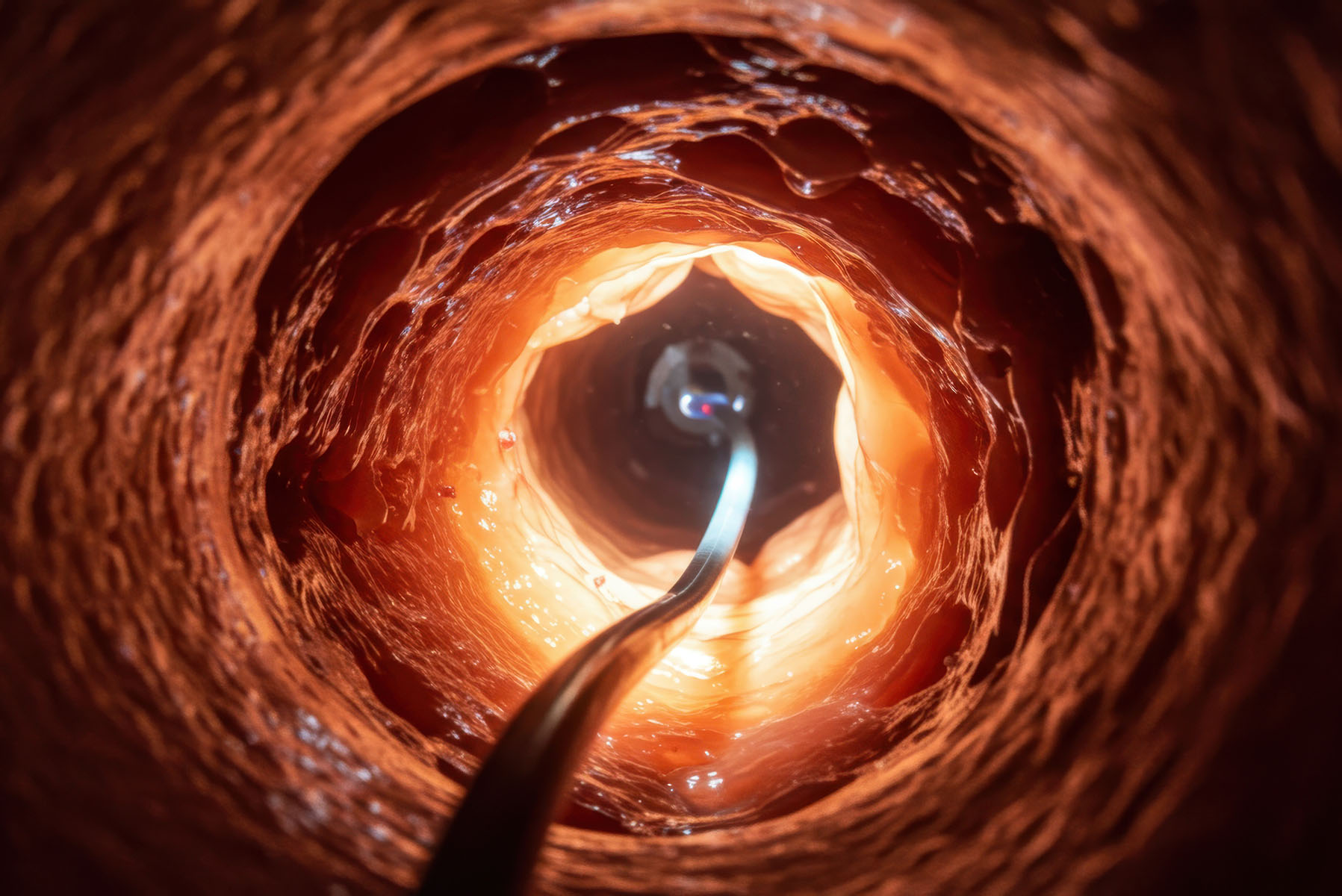
When water turns murky or dense with mud, sediment or chemistry, optical cameras stop being useful, and operators are left guessing about what lies on the other side of the fluid. The Acoustic Camera from Los Alamos National Laboratory replaces that guesswork with sharp 3D imagery generated from sound, achieving sub-millimeter depth resolution in near real time. Instead of inferring the size and orientation of a submerged object from an impression block or a low-frequency sonar return, an operator receives an actual shape, with depth cues and material hints, on the first pass. The result is faster decisions in environments that have historically been opaque, whether the goal is recovering a lost tool from a wellbore, checking the integrity of a net pen in a turbid fjord, or inspecting submerged infrastructure where flushing or cleaning the surrounding fluid is not an option.
How it Works:
The system operates by transmitting high-frequency ultrasonic pulses—typically in the hundreds of kilohertz range (approximately 100–800 kHz)—into the wellbore toward an object of interest. These sound waves reflect off the object and are captured by a two-dimensional acoustic receiver array. By measuring the time-of-flight and spatial distribution of the returned echoes, onboard digital signal processing reconstructs a detailed 3D image of the object in near real time. Because ultrasound propagates through drilling mud and other optically opaque fluids, the system can generate clear 3D images without requiring fluid replacement or well cleanout.